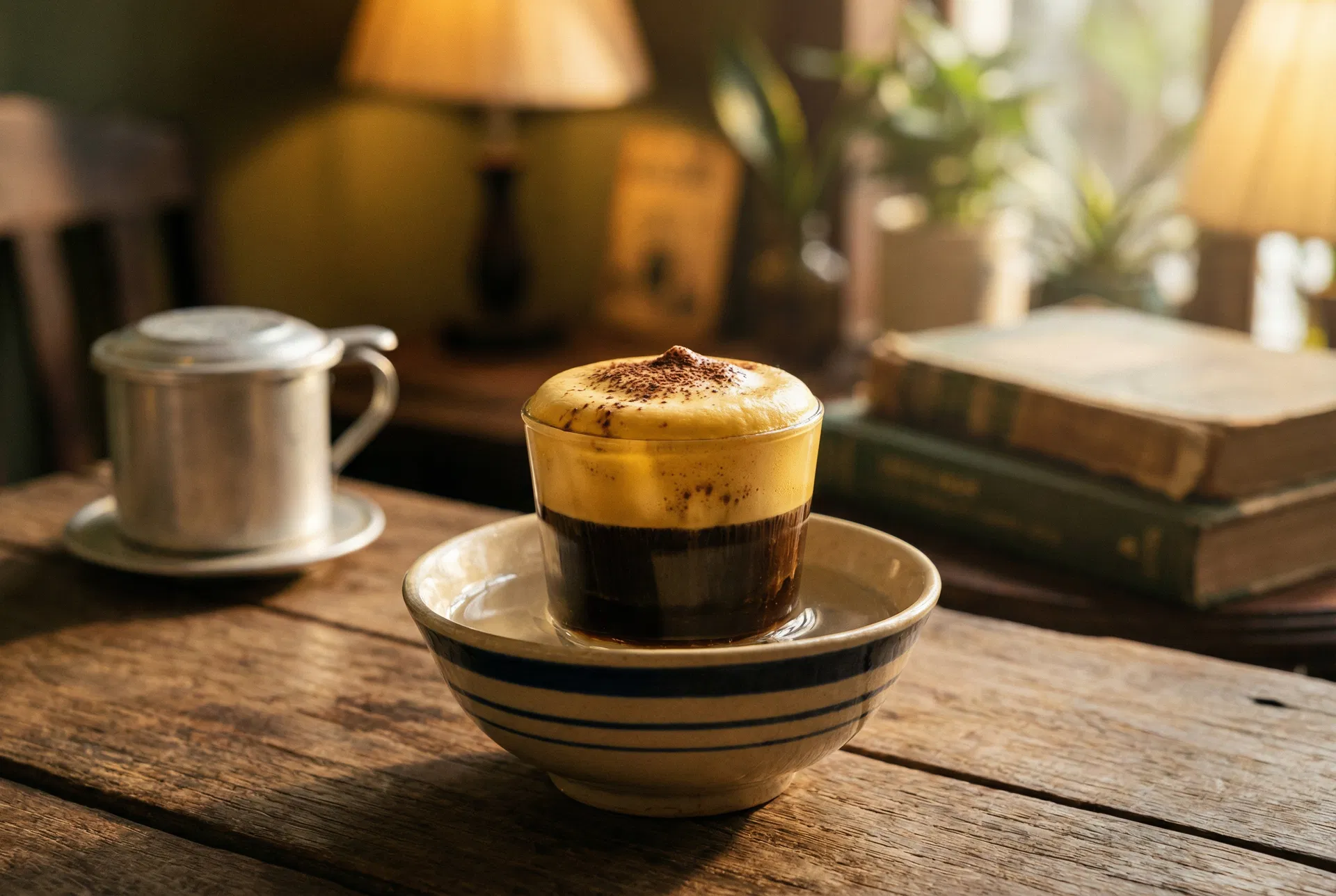
Green coffee beans keep for months, cost a fraction of roasted beans, and turn into the freshest coffee you have ever tasted with about fifteen minutes of heat. Home roasting sounds like a hobbyist deep end, but the barrier to entry is lower than you think: many people start with a popcorn popper or a skillet. Here is how the process works and how to roast your first batch.
Coffee Roasting 8 min read
Home Coffee Roasting for Beginners: Your First Batch
Green coffee usually costs less than roasted and stays fresh for months, so you can roast only what you need. Here is how to roast your first batch at home.
2026-11-06
Why Roast Your Own Coffee
The case for home roasting starts with freshness. Roasted coffee peaks within a few weeks of roasting, then slowly fades. Green, unroasted coffee stays fresh for many months when stored cool and dry, so you can roast exactly what you need, when you need it, and always drink coffee at its best.
Cost is the other argument. Green beans usually cost noticeably less than roasted beans from the same lot, though roasting shrinks their weight, so the real savings are smaller than the sticker gap suggests. If your household drinks a bag a week, they still add up.
Then there is the hobby itself. Roasting teaches you how origin, process, and heat interact to create flavor, and few kitchen projects deliver as much satisfaction per minute. Your first genuinely great batch will spoil cafe coffee for you, at least for a while.
What Happens During Roasting
Roasting is a controlled series of chemical transformations. Green beans start dense, grassy, and astringent. As heat builds, they dry out, yellow, and begin to smell like hay, then toast. Sugars and amino acids react in the Maillard cascade, building the brown color and roasted flavors we recognize.
Around 385 to 400 degrees Fahrenheit, the beans audibly crack as steam bursts the cell structure. This first crack marks the beginning of drinkable coffee: a light roast, bright and origin-forward. Roast longer and the beans darken, acidity softens, and bittersweet roasty notes build. A second, quieter crack signals dark roast territory, where origin character gives way to roast flavor.
Understanding this arc explains everything about roast levels. Our guide to light, medium, and dark roasts at https://ourcoffeetyme.com/article/light-vs-medium-vs-dark-roast maps the flavors at each stage.
Three Ways to Roast at Home
The classic beginner's tool is a hot air popcorn popper, the same machine fluid-bed roasters imitate. Add a half cup of green beans, switch it on, and the beans roast in five to eight minutes. It is cheap, fast, and forgiving, though it roasts small batches and offers little control. Choose a model with side vents rather than a mesh bottom, which can ignite chaff, and know that popper makers do not rate their machines for coffee.
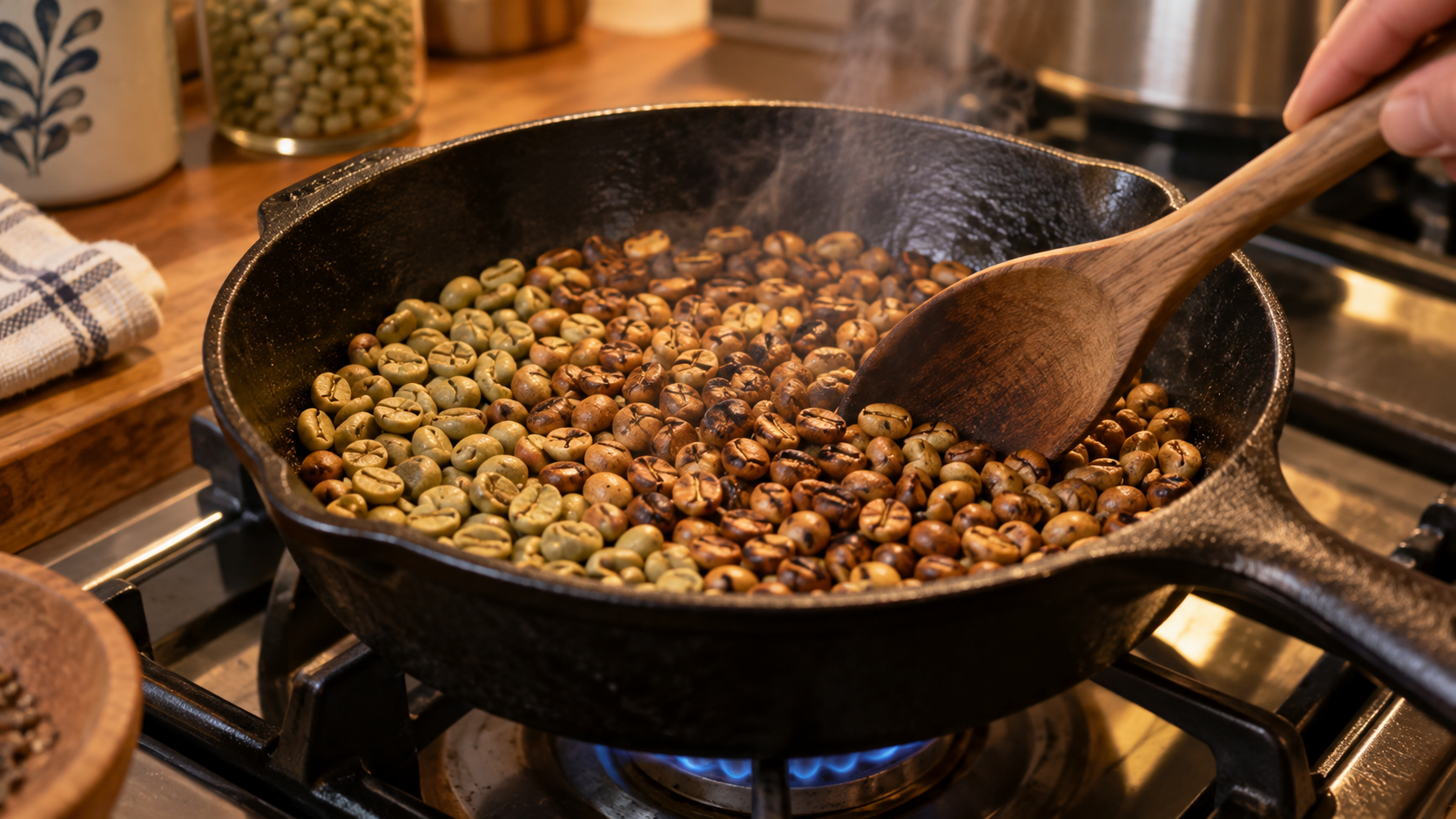
A cast iron skillet or wok over medium heat works too. Keep the beans moving constantly with a whisk or wooden spoon and expect ten to fifteen minutes per batch. It takes practice to roast evenly, but the equipment is already in your kitchen.
Dedicated home roasters, from simple drum machines to smart fluid-bed models, offer real temperature control and repeatability for a few hundred dollars. They make sense once you know the hobby will stick. Whatever you use, roast near an open window or outside: roasting produces a lot of smoke and chaff.
Whichever method you choose, mind the chaff, the papery skin that flakes off the beans as they roast. It is light, messy, and flammable in quantity, so roast where cleanup is easy and never leave a hot roaster unattended. A metal colander and a quick shake outdoors between batches keeps it under control.
Your First Batch, Step by Step
Start with a forgiving bean: a Brazilian natural or a washed Central American coffee roasts evenly and tastes good across a range of roast levels. Buy a pound of green coffee from a specialty supplier and plan to roast it in small batches while you learn.
Weigh out your beans, note the time, and pay attention to the cracks. Stop the roast about thirty seconds to a minute after first crack finishes for a light-to-medium roast, and get the beans cooling immediately. Spread them on a baking sheet or in a colander and stir; fast cooling stops the cooking and preserves flavor.
Then wait. Fresh-roasted coffee needs one to three days to release carbon dioxide before it brews well. Grind and brew on day two, taste, and adjust the next batch. Our coffee-to-water guide at https://ourcoffeetyme.com/article/coffee-to-water-ratio-guide will help you dial in the cup.
Keep notes from your very first batch. Record the bean, the weight, the roast time, when first crack started, and how long you roasted past it, then write down how the cup tasted two days later. Five batches of notes will teach you more about roasting than any guide, because every roaster and every kitchen behaves a little differently, and your palate is the final instrument.
Keep Exploring
Learn to read green coffee labels the way you read roasted ones at https://ourcoffeetyme.com/article/how-to-read-coffee-bag, and explore the origins worth roasting first: Brazil at https://ourcoffeetyme.com/article/brazilian-coffee-explained and Kenya at https://ourcoffeetyme.com/article/kenya-aa-coffee-explained. When your roast is ready, our pour over basics at https://ourcoffeetyme.com/article/pour-over-coffee-basics-v60 will help you taste everything it has to offer.
Photo: Aug Olsen, via Wikimedia Commons