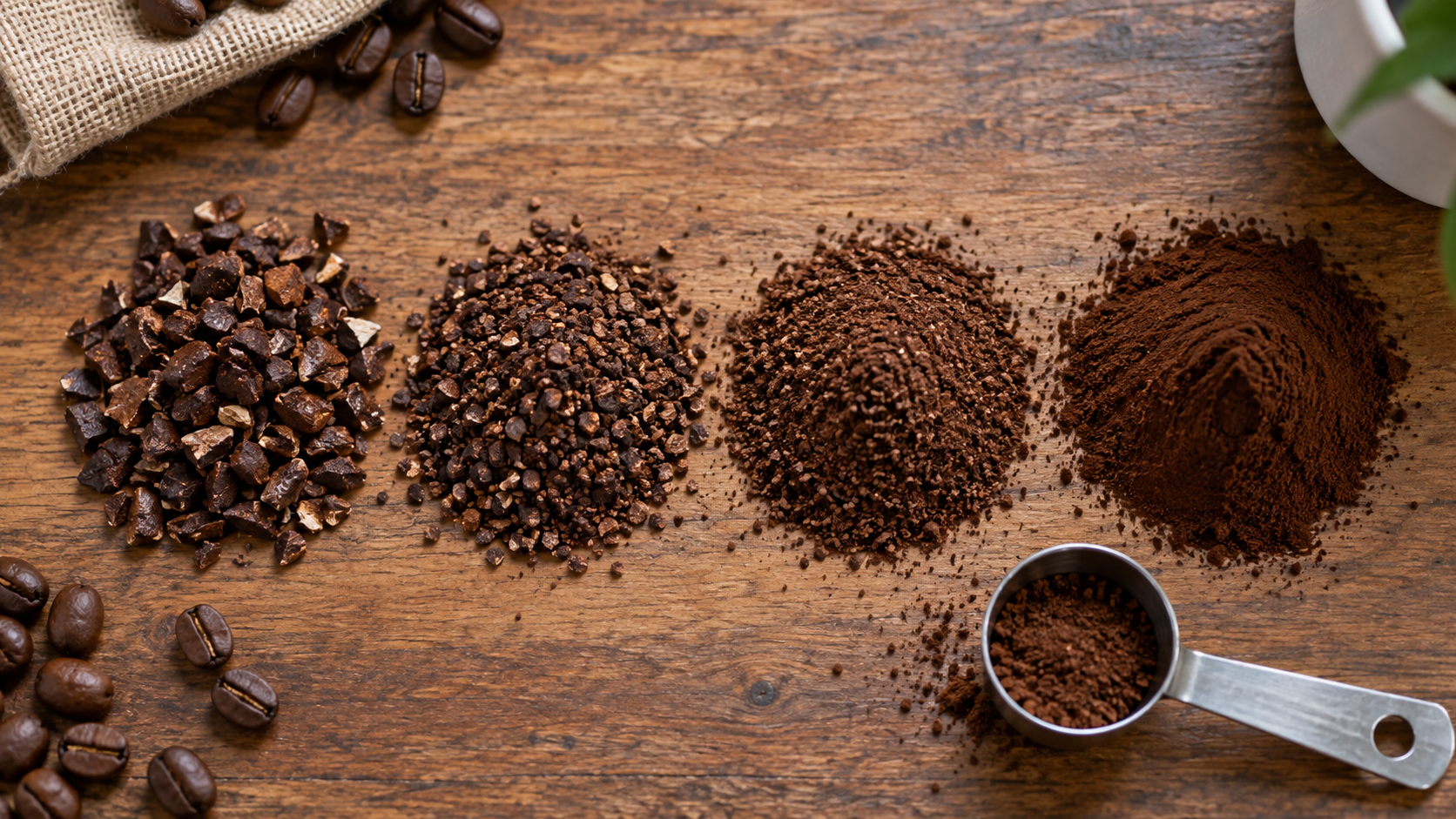
You do not need a refractometer or a lab to find the right grind. Your tongue is a remarkably good extraction meter, and the feedback loop is simple: taste, adjust one notch, repeat.
If your coffee tastes sour, sharp, or oddly salty, it is under-extracted, so grind finer next time. If it tastes bitter, harsh, or drying like over-steeped tea, it is over-extracted, so grind coarser. When the cup lands sweet and balanced, write the setting down so you can return to it.
Change only one variable at a time. If you adjust grind and dose together, you will never know which one fixed the problem. Keep your coffee-to-water ratio steady while you hunt for the right grind, then fine-tune strength afterward. Our guide to coffee-to-water ratios pairs well with this step.
Fresh grounds matter here too. Coffee starts losing aromatics within minutes of grinding, so grind right before you brew whenever you can. Pre-ground coffee can still make a decent cup, but it narrows your window for adjustment because the flavor is already fading.